


NCCU Hosts Lecture on Algorithmic Governance with YLS’s Karman Lucero

【Article by College of Communication】
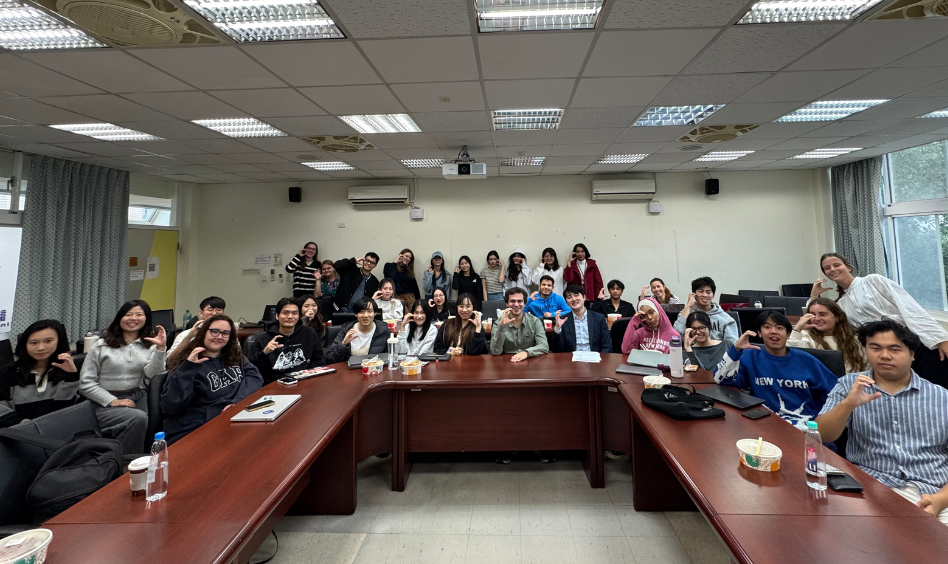
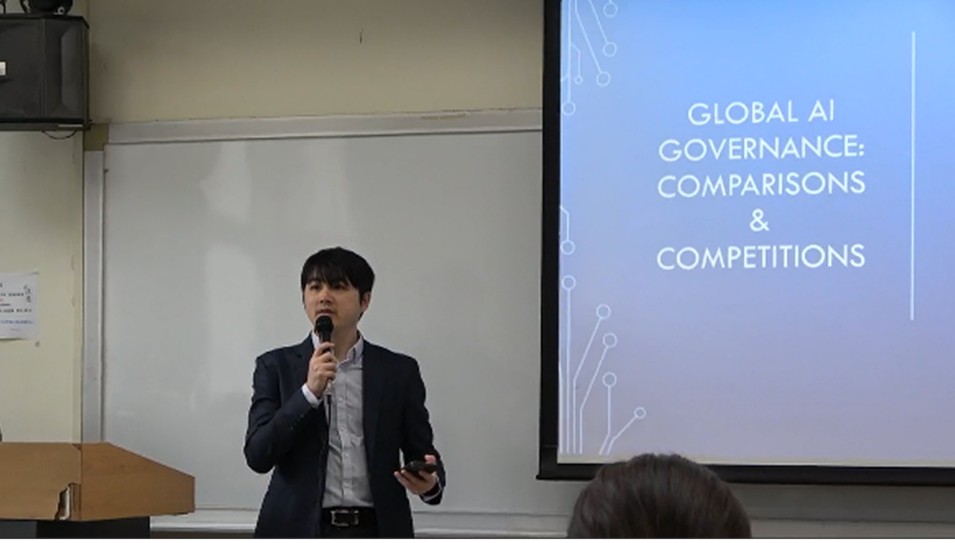
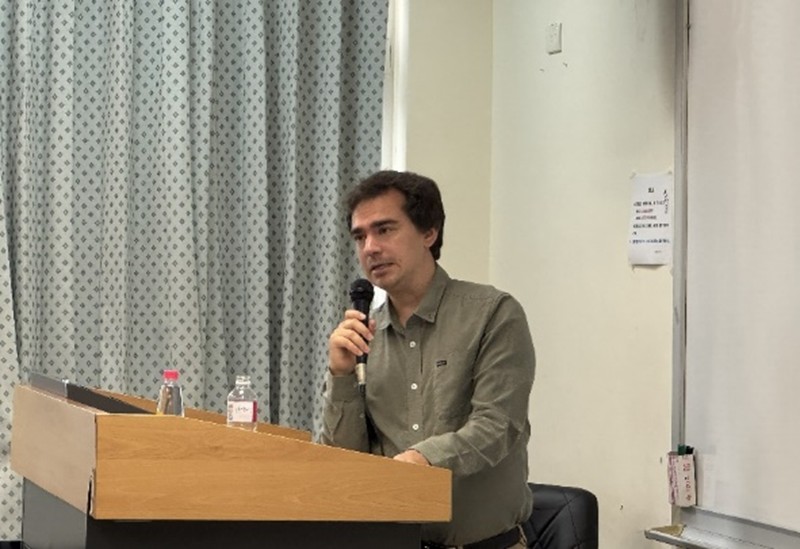
NCCU had the honor of hosting Senior Fellow at Yale Law School, Professor Karman Lucero, for a lecture on Algorithmic Governance Policy and Implementation Approaches in the United States on November 25th, 2025. The event was moderated by Chien Chih, Lu (Jesse), Assistant Professor at NCCU College of Communication. During the lecture, Professor Lucero provided an in-depth exploration of artificial intelligence (AI) governance, highlighting both national and global challenges while examining the complex interplay between technology, law, and policy.
Professor Lucero emphasized that AI is a uniquely transformative technology, capable not only of enhancing physical capabilities, such as autonomous vehicles and drones, but also of shaping human cognition, decision-making, and political perspectives. Unlike centralized technologies like nuclear weapons, AI is highly distributed, multi-modal, and difficult to regulate, with applications ranging from benign content creation to potentially destabilizing actions. Its non-rival and non-fungible nature further distinguish it from traditional resources like oil, allowing multiple actors to utilize the same AI tools while producing diverse outputs.
During the lecture, Professor Lucero compared AI approaches in the United States and China. In the U.S., there is no overarching national AI law; regulation occurs sector by sector, such as banking under the Securities Exchange Commission or medicine under the Food and Drug Administration. Courts play a central role in determining intellectual property, data ownership, and liability, while states and private companies contribute to governance, creating a decentralized system in which policies are interpreted and implemented differently across jurisdictions; China, by contrast, operates under a centralized framework with nuanced implementation. While Beijing sets broad policy directions, local authorities and technology companies are tasked with translating regulations into practice, often resulting in diverse approaches across regions. The Cyberspace Administration of China (CAC) serves as the most influential regulatory body, combining governmental authority with party oversight to enforce both technical and ideological compliance. Major tech hubs, including Shanghai, Shenzhen, and Hangzhou, have developed local rules shaping AI deployment, while dense ecosystems of AI, robotics, software, and semiconductor companies enable rapid scaling and cross-industry collaboration.
Concluding his lecture, Professor Lucero emphasized that AI governance should be understood as a complex ecosystem. He encouraged governments, companies, and research institutions to consider the broader implications of AI on social stability, human decision-making, and global cooperation, stressing the importance of strategic stability, institutional awareness, and recognition of diverse interests to ensure AI develops safely and responsibly in a rapidly changing technological landscape.
The lecture ended on a high note with an engaging Q&A session and lively exchange of ideas between Professor Lucero and the students. We extend our sincere gratitude to Professor Lucero for sharing her professional insights and firsthand experiences with AI, offering NCCU students a deeper and more comprehensive understanding of the intricate relationships between AI, technology, law, and policy.