
【Article by International College of Innovation】
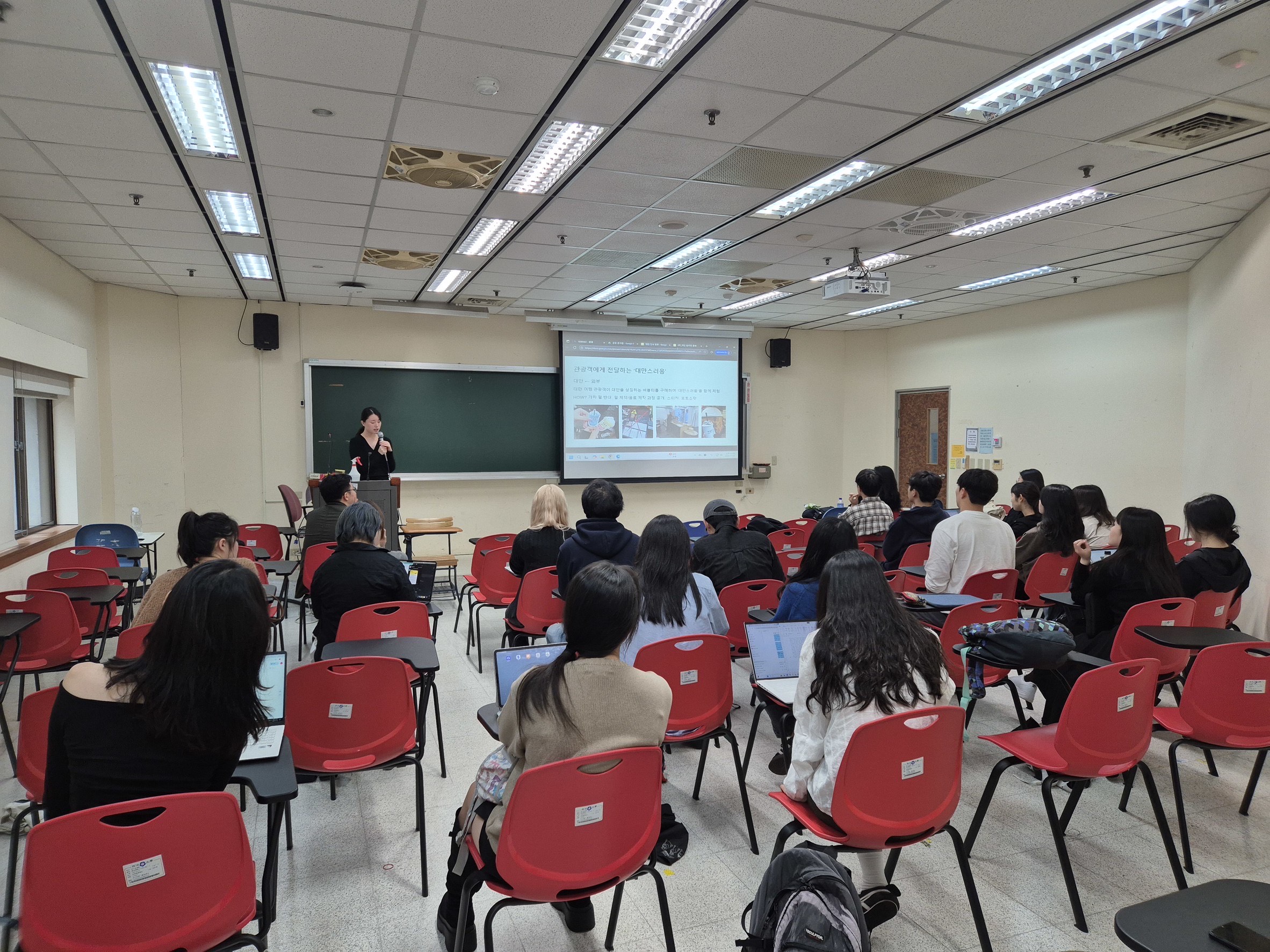
On 13 November 2025, 20 students from Seoul National University (SNU) presented their preliminary findings in the General Building, as a wrap-up to their week-long field trip in Taipei. This visit stemmed from SNU’s annual fieldwork program, which offers anthropology students the chance to conduct group research abroad. Collaborated with the Innovation International College USR Project, its goal was to enhance students’ ability to foster international exchange from a local perspective.
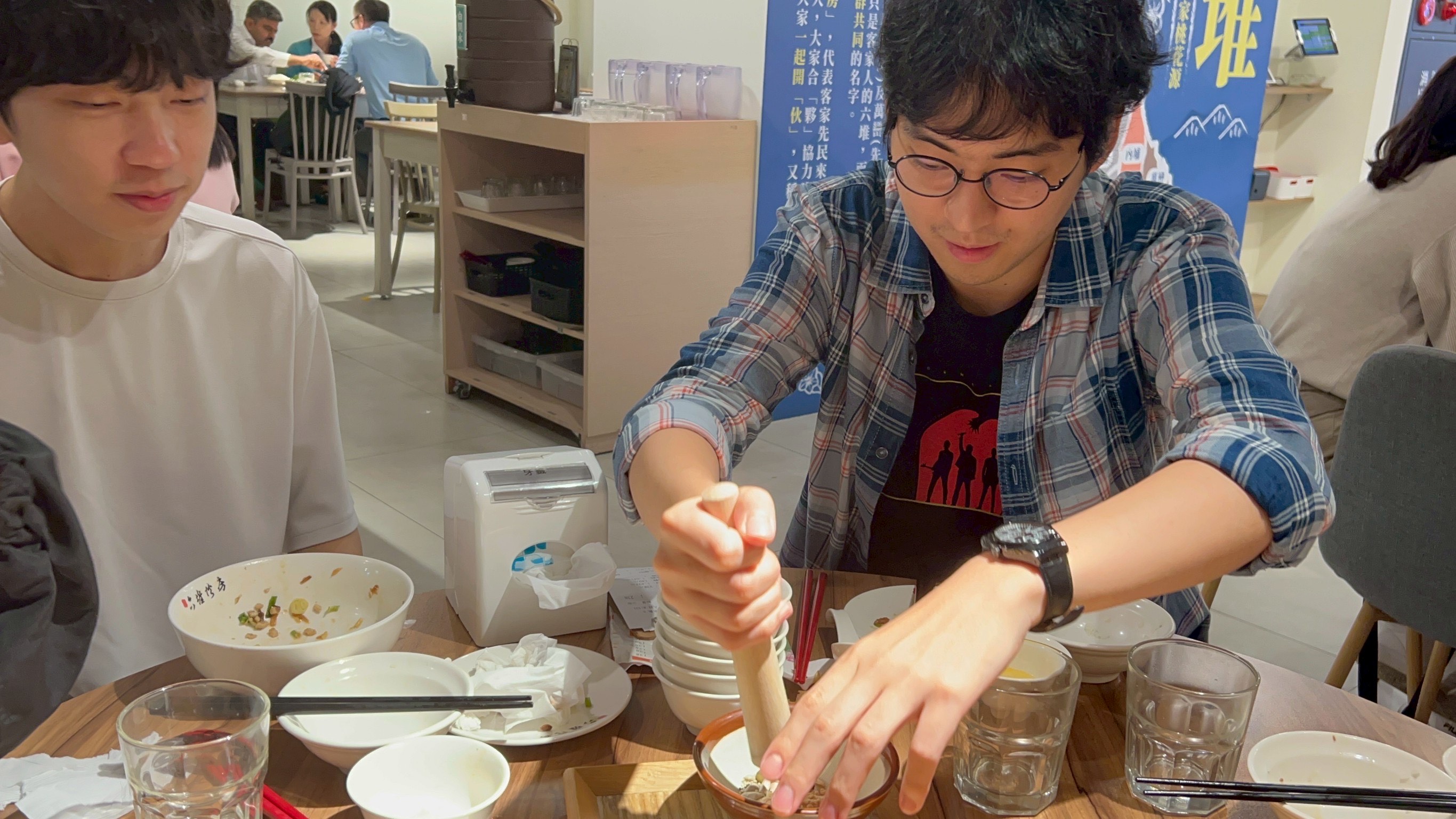
This activity was realized through the joint effort between Associate Professor Lee Seung Cheol from SNU’s Department of Anthropology and Associate Professor Ou Tzu-Chi from the International College of Innovation (ICI), NCCU. According to Prof. Lee, this year’s cohort was particularly excited to travel and do participatory observation on Taiwanese food and culture. PhD assistant Son Sugyeong explained that before arriving in Taiwan, the teams studied relevant reading materials and finalized five topics. Their curiosity lies in understanding the significance of dining cultures like beef noodles, boba tea, and Hakka restaurants; urban planning at old Taipei street Tonghua Street 通化街; and Hot Springs culture in Wulai 烏來.
The topics provided from the perspectives of foreigners encouraged ICI students to reflect on their own cultural identity. In late October, SNU students were matched with 28 ICI students to conduct fieldwork together based on their interests. For example, ICI junior Chiu Jo Yu joined the team on Hakka culture as she has Hakka heritage herself. Chiu said, “I reflected on the fact that I am not actually that familiar with my culture, as a Hakka person, I can’t directly explain everything in my culture.”
The age and experience dynamics have created opportunities for ICI students to learn from veterans. While most students from SNU are juniors and seniors, ICI students consist mostly of freshmen who have just started their journey of learning anthropology. SNU students were generally more familiar with anthropological methods and designed their projects from the ground up. Hence, their efforts served as models for ICI freshmen to learn from. ICI freshman Zeng Hong-Xiang explains that this experience not only “showed me the importance of preparation before actually doing fieldwork” but also “gives me an opportunity to see the emotional side of conducting interviews.” As for Chiu, she recounts her discussion on how SNU students drew inspiration from reading classics in anthropology.
On the other hand, ICI students played an important role as local guides and introductory informants. SNU student Cho Minji shared her experiences working with local students on the topics of boba tea. She explained that: “Having only one or two single days, it’s not enough, but because we have them (ICI students), we were able to discover more and have the basic background of our research.” After ICI students offered brief introductions to different brands, flavors, and consumer preferences, it prompted spontaneous adjustments to their topic. Another student, Shin Hyewon, mentions how they reframed their research question after finding out that boba tea itself is not a common daily option for Taiwanese. Minji adds that “That was the point where we have to change our assumptions of the topic…” Instead, they approached how Taiwanese identify with boba tea as a cultural symbol despite not being consumed every day.
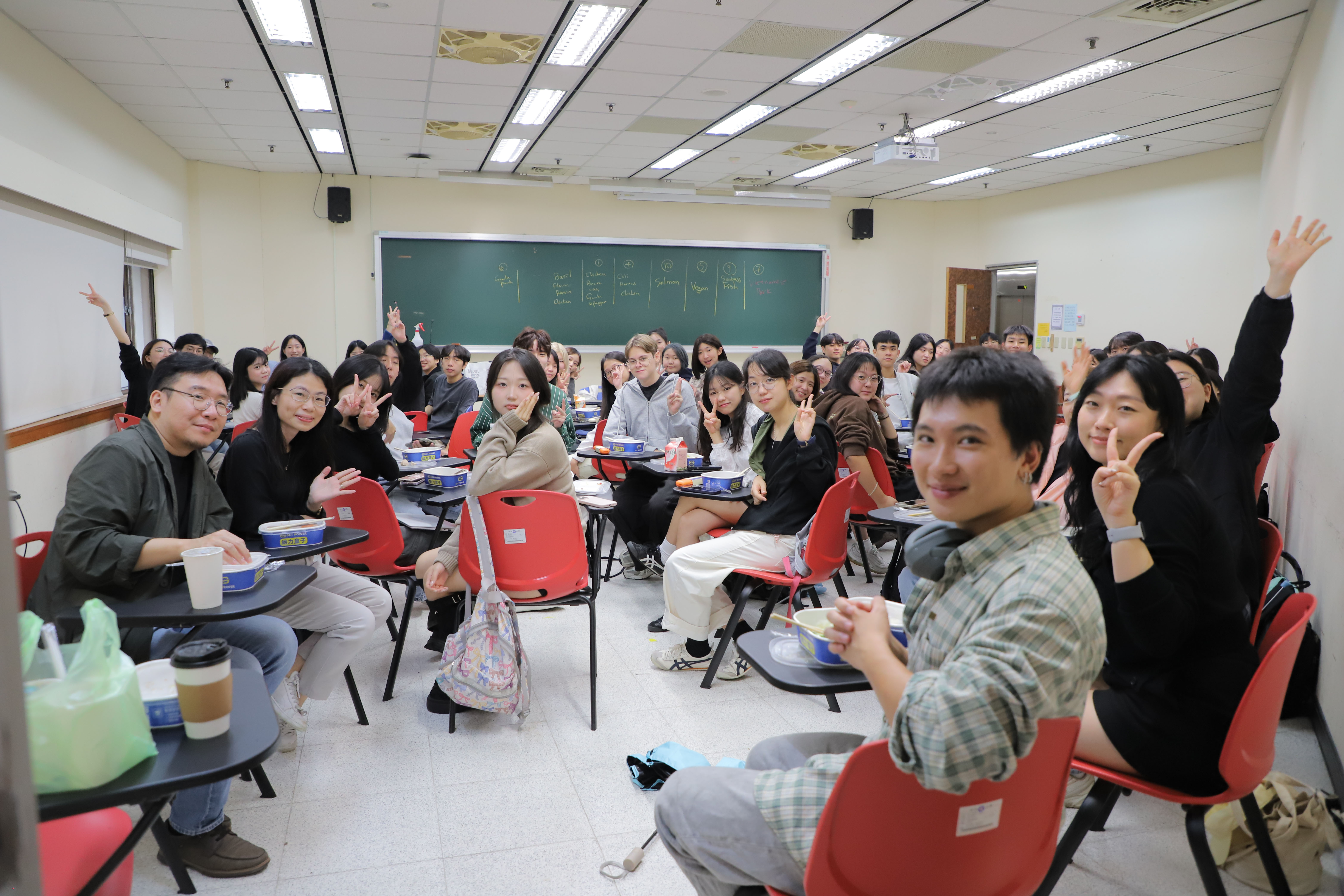
This collaborative project illustrates how ICI combines resources to foster cross-national exchange and provide practical chances to connect local culture with international perspectives. Through this collaboration, students from both sides not only built friendships with peers from another country but also broadened their theoretical knowledge and hands-on fieldwork experience.