


【Article by Master’s Program in Global Communication and Innovation Technology (GCIT)】
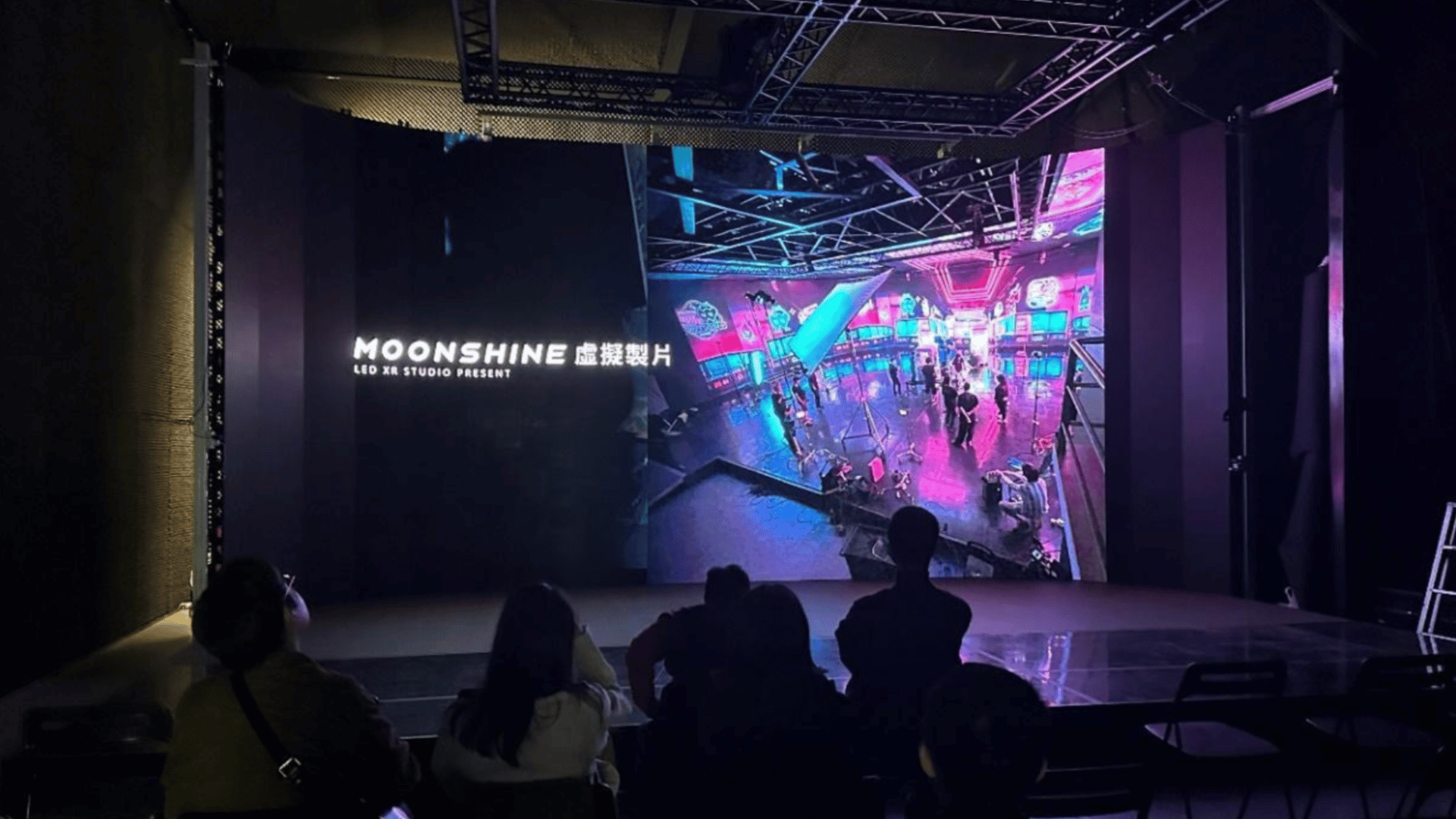
With the rapid advancement of artificial intelligence (AI) technology, Extended Reality (XR) is revolutionizing traditional filmmaking. Using virtual studios and real-time digital scene generation, creators can effortlessly shoot diverse scenes without being constrained by physical locations. AI further enhances the efficiency and precision of scene creation, paving the way for more flexible and innovative production approaches. On December 9th, students from the Master’s program in Global Communication and Innovation Technology (GCIT) at National Chengchi University and students from the Department of Radio and Television visited Moonshine Studio, a famous Taiwanese film production company. They explored the advanced XR virtual studio in Xizhi and gained insights into the technologies and creative principles.
Virtual Studios Transform Filmmaking: Breaking Free from Green Screen Constraints
Moonshine, a famous visual effects and 3D animation company in Taiwan, integrates AI and XR technologies to deliver groundbreaking solutions for image production. In 2021, in collaboration with industry partners, the company invested NT$50 million to establish a 160-ping LED virtual studio featuring real-time scene modeling powered by Unreal Engine. Jian-Ming Chen, the project manager at Moonshine, explained that the XR studio replaces traditional green screens with LED displays and uses camera tracking to deliver realistic lighting and shadow effects. This setup allows real-time adjustments during filming, significantly reducing the time and cost associated with post-production. XR studio addresses traditional filming limitations, such as capturing fleeting sunset moments for car commercials, shooting grand aurora landscapes, or creating futuristic sci-fi worlds. The combination of virtual studios and AI assistance enhances production efficiency and allows for meticulous post-production corrections, ensuring flawless visuals that are highly populated by the industry.
AI-Driven Image Enhancement: Taiwan's XR Expertise Attracts International Production Teams
Moonshine has worked on numerous Taiwanese dramas, including “Gold Leaf”, “Wave Makers,” and music videos for famous bands like Mayday. These successes have also attracted international teams to collaborate with the studio. One notable example is Christopher Lloyd, the main character from “Back to the Future,” who filmed a car commercial in Taiwan. Scenes shot on a beach in Tamsui were later transformed into a Los Angeles coastal setting through AI rendering, achieving a high-quality international production at a fraction of the cost. Chen highlighted Taiwan’s competitive edge in terms of cost-efficiency and advanced technical expertise, making it a popular choice for international film production teams. Producing the same project overseas could cost three to five times more, further cementing Taiwan’s appeal on the global stage. AI also plays a pivotal role in post-production, saving significant labor and costs. It can extend visuals beyond the physical studio limitations through precise calculations, bridging the gap between creative vision and production constraints.
Technical Insights and Internship Opportunities: A Valuable Learning Experience
During the Q&A session, students were most interested in technical challenges, such as resolving flickering caused by mismatched frame rates between the camera and LED displays. Chen explained, “This is indeed a common issue. Careful adjustments during pre-production are essential, though they can also be resolved through post-production techniques. Experienced photographers can often adjust parameters or use lighting to address the problem during filming.” Regarding internship opportunities, Chen said that Moonshine consistently offers opportunities. Students with skills in Unreal Engine or proficiency in foreign languages are encouraged to apply for roles in art production or international departments, offering a good chance to work on collaborations with renowned production companies. This well-organized activity, led by Jian-Ming Chen, provided students with a comprehensive aspect of XR technology’s innovation applications. Students had the opportunity to experience an innovative virtual studio and gained valuable insights into how AI is shaping the future of visual storytelling, leaving them inspired by the limitless possibilities of modern filmmaking.
[此中英文稿和圖片以及全球傳播與創新科技碩士學位學程均獲得中華民國文化部的補助。]