Date :
2024-05-17
Department :
GCIT
【Article by Master’s Program in Global Communication and Innovation Technology】
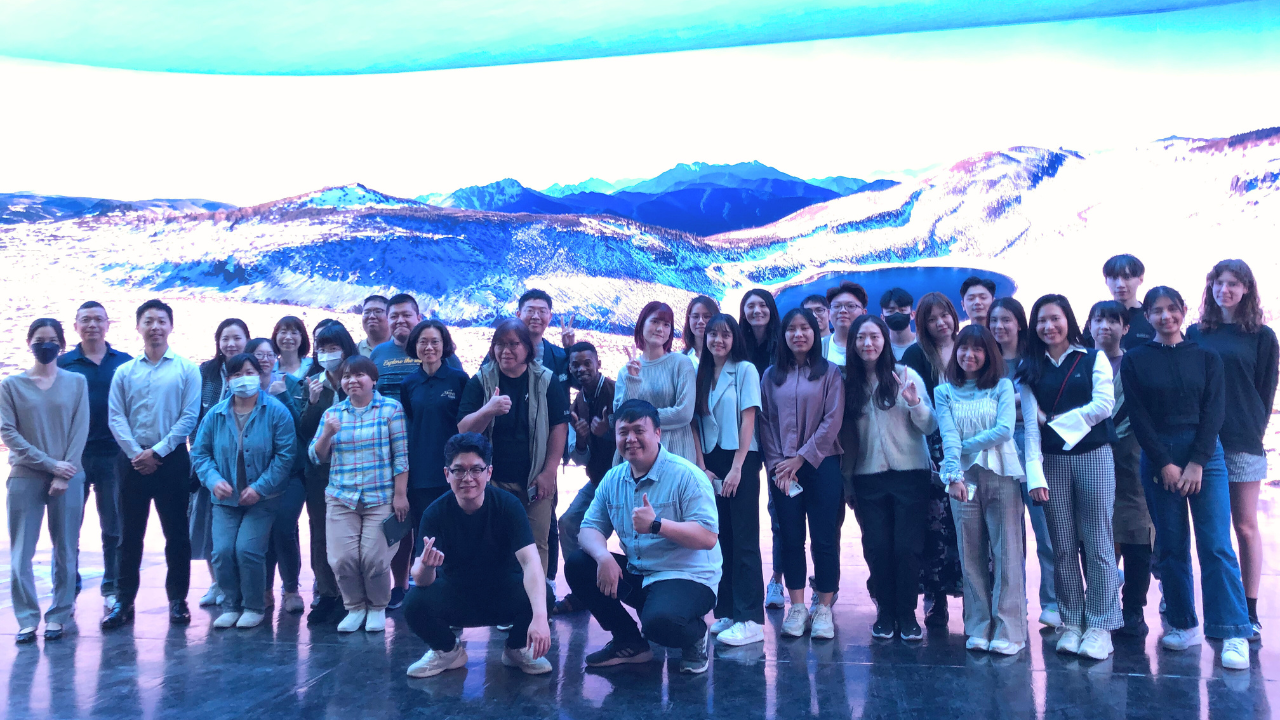
With the rapid development of AI technology, Extended Reality (XR) is gradually being widely used in film and television production, revolutionizing the way scenes are shot. Moonshine XR Studio, a film and television company, is at the forefront of this innovation. On May 15th, the studio hosted an event for students and faculty from the Master’s program in Global Communication and Innovation Technology(GCIT) at National Chengchi University and the Graduate Institute of Technology and Vocational Education (GITVE) at National Taipei University of Technology, offering them a unique opportunity to experience the latest shooting techniques in the XR virtual studio.
Moonshine XR Studio has been providing 3D animation and special effects services for well-known domestic and international film and television productions. With the introduction of an advanced LED virtual studio, they can now instantly display virtual scene images, enhancing the shooting process and making it more immersive and creative. The studio has collaborated on numerous projects, including assisting famous bands and popular Taiwanese dramas, and hosting online concerts and shoots.
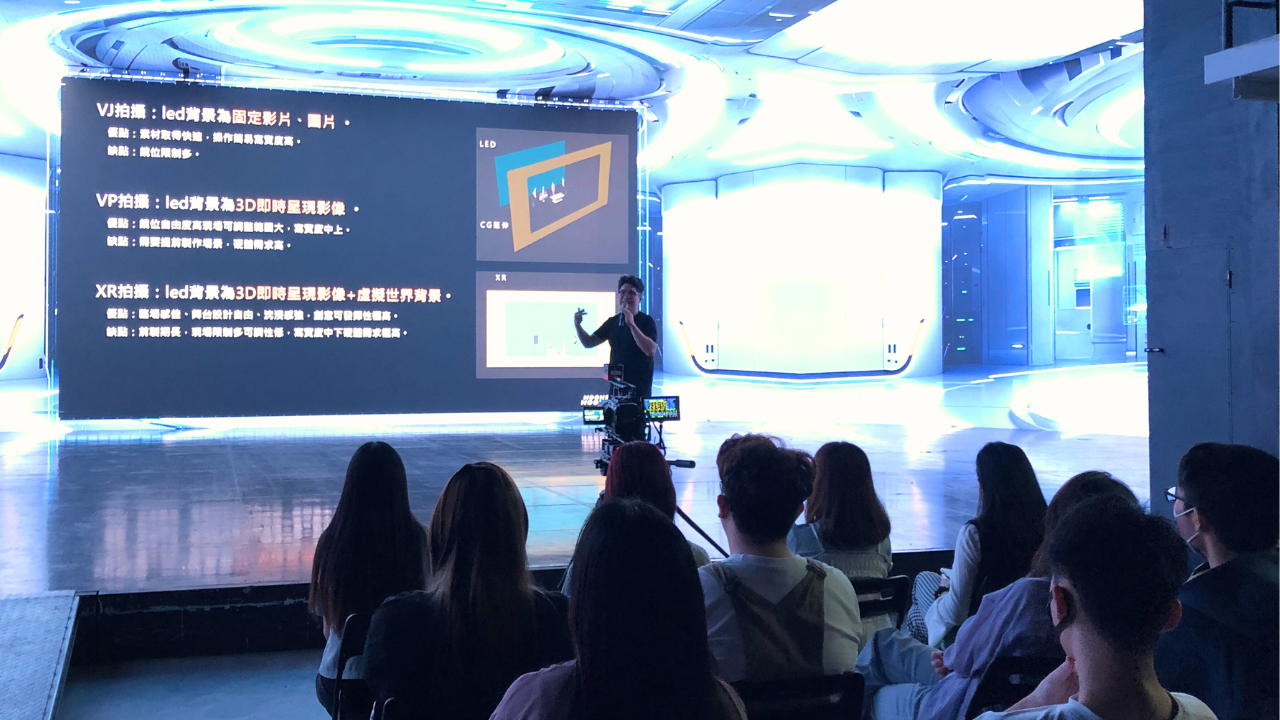
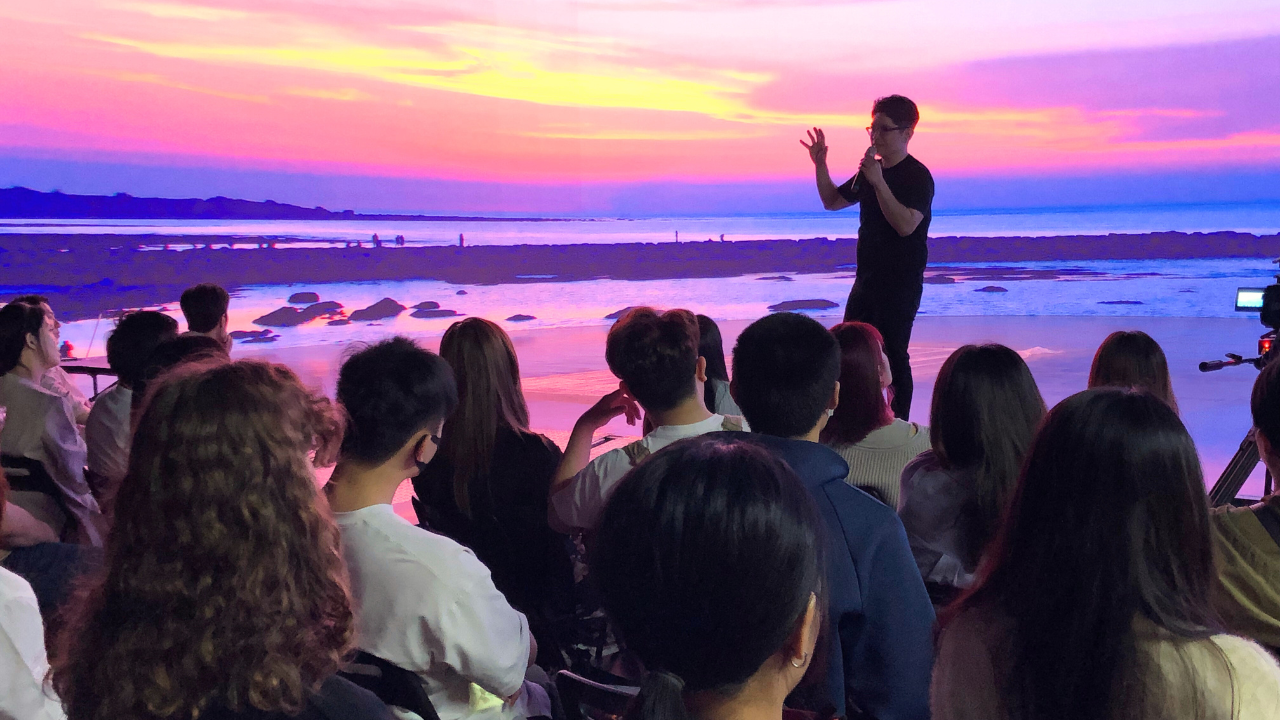
In front of the 160 pings (528 square meters) virtual studio, Production Director Wang Xin-Xiang demonstrated the studio's capabilities. He used LED screens to display videos and images of various scenes and introduced the three latest shooting modes: Video Jockey (VJ), Virtual Production (VP), and Extended Reality (XR).
Wang explained that the virtual studio can address traditional filming difficulties such as long schedules, weather and time constraints, and heavy reliance on post-production. The recent integration of AI technology has further optimized the process, reducing the need for extensive post-production effects and allowing directors to work more efficiently.
Wang cited the Taiwanese drama "Gold Leaf" and the MV shooting of the band Mayday as examples of the studio's work. "Gold Leaf " was the first Taiwanese drama to use virtual production technology, presenting historical street scenes and scenic views through LED screens.
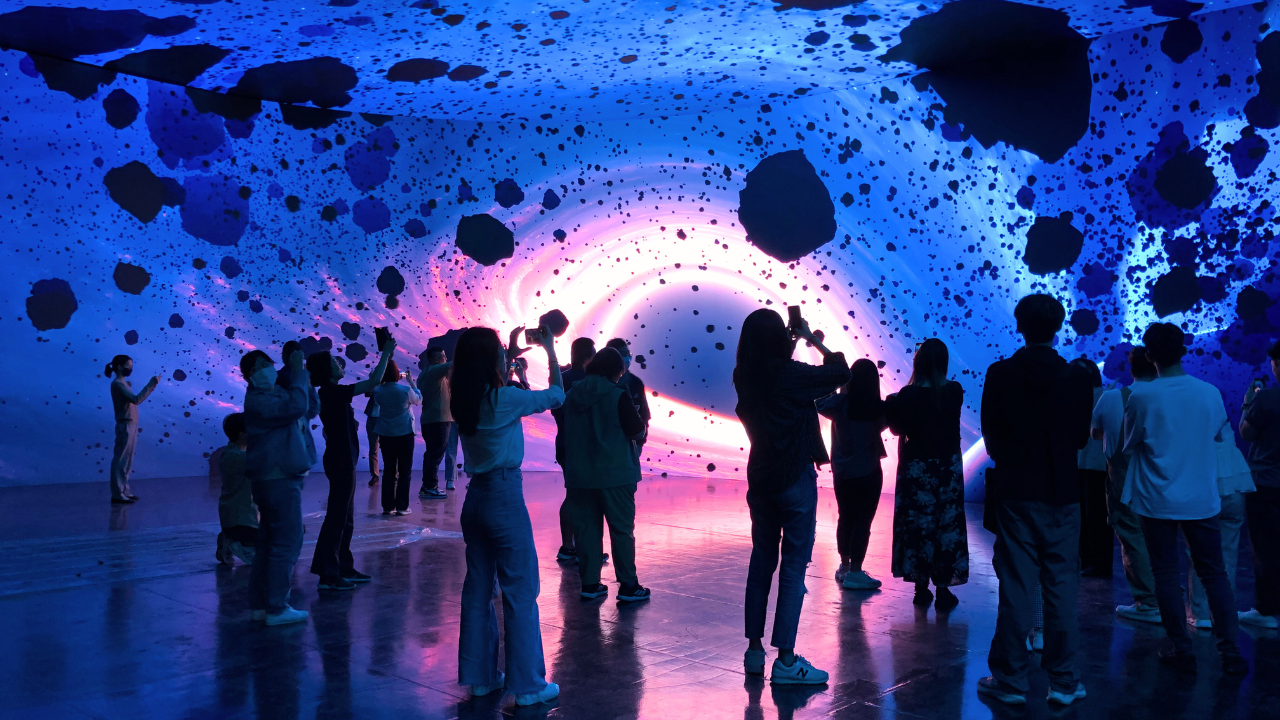
The visit allowed students and faculty to freely explore the virtual scenes. Some excitedly took photos in front of the LED screens, while others immersed themselves in virtual backgrounds, experiencing space travel, scenic lakes, or game scenes. They enjoyed a visual feast of reality and virtuality intertwining. This virtual environment, rendered in real-time by LED screens, expands filming possibilities and exemplifies the digital transformation of film and television production.
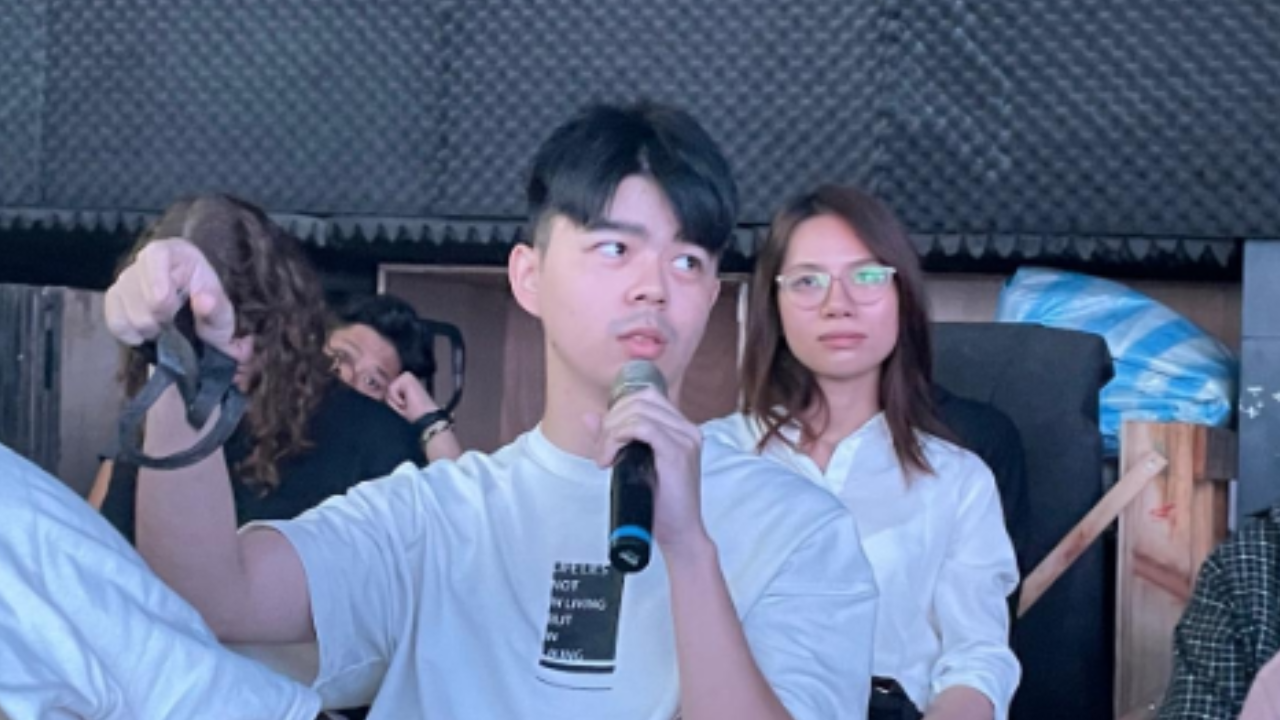
Students were eager to ask about the rendering of light and the realism of object distances when characters move. They also discussed the impact of AI-generated tools such as "Sora" on the industry. Wang reassured them that the studio's lighting engineers could create realistic lighting effects, and 3D digital tracking could accurately portray changes in perspective. He also emphasized the potential of AI to revolutionize tasks like background removal and animation production, making them more efficient.
Technical artist Lin Chu-Mou encouraged students to prioritize practical experience over theoretical knowledge. He suggested learning software like "TouchDesigner" and "Unreal" to keep up with the latest technological advancements.
The visit, meticulously planned by Moonshine XR Studio's Project Manager, Busta Chen, provided students with valuable insights into the future of film and television production. It showcased the studio's cutting-edge technology and potential to transform the industry. Overall, the event left students inspired and eager to embrace the opportunities presented by AI and XR technology in entertainment.